Los Angeles + The Retail Experience

ACRE Southern California hosted its annual Los Angeles area focused event this past Wednesday, November 16th, at the Olympic Collection in the heart of West LA. The event, entitled “Los Angeles + The Retail Experience,” consisted of a panel discussion that focused on how cultural influences and technological innovations currently shape-shift the Los Angeles retail marketplace. The esteemed panelists sought to answer that all important, yet utterly elusive question: How does the industry adapt?

The Panel

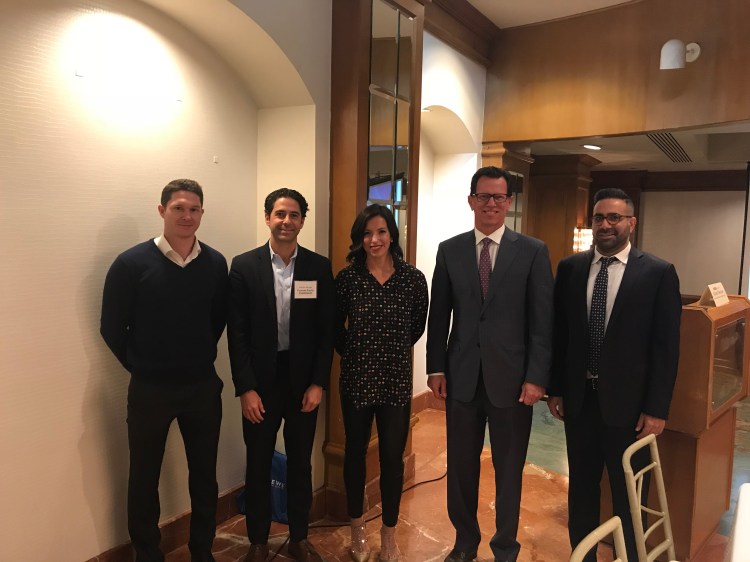
For the third year in a row, Michael Pakravan of Matthews Real Estate, moderated ACRE’s Los Angeles focused event. And, onceagain, Michael assembled an exceptional troupe of real estate development heavy weights, including Dennis Borowsky of Merlone Geier Partners; Christy Kord or Westfield; Adrian Berger or Cypress Equity Investments; and Vincent Manzenberger of Greystar.
IMG_4303

The diverse group of panelists represented a range of voices from across the commercial development industry. Everything from international mall developers (Westfield) to national multi-family developers (Greystar) to Southern California-based firms redeveloping existing properties (Merlone Geier Partners) and developing high street retail projects (Cypress Equity Investments).

Ongoing Projects

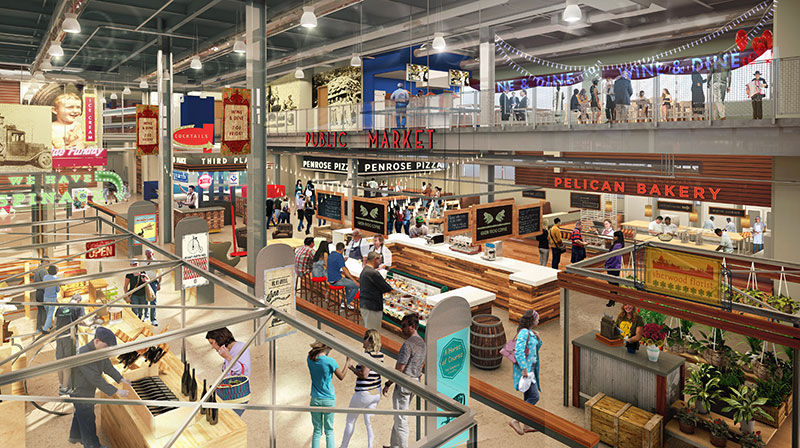
To offer a practical glimpse of retail development’s current response to the shifting marketplace, Mr. Pakravan invited each panelist to present a project they are currently working on prior to delving into the meat of discussion. Dennis Borowsky offered Merlone Geier Partners’s NoHo West project, the redevelopment of a former Macy’s anchored center that includes retail, office, and residential uses. Christy Kord served up Westfield’s Topanga Canyon Food Hall, the redevelopment of an existing mall exclusively into small-format food tenants. Adrian Berger delivered Cypress Equity Investments’ 4301 Riverside West, an upscale strip center situated between Burbank and Toluca Lake. Finally, Vince presented Greystar’s AMO Lofts, a mixed-use residential and retail project currently in development in Downtown LA’s Arts District.

Retail Evolution – The Foodie Generation

Following the individual presentations, Merlone Geier Partners’s Dennis Borowsky addressed the question of why the NoHo West development continues to focus on leasing space to “traditional retail” users. “[Traditional] retail wants to be next to other [traditional] retail,” Borowsky responded, further noting “you have strike balance” in reference to the current heavy-demand for restaurant users.

Picking up that thread, Westfield’s Christy Kord offered her take on the tipping issue of “how much food is too much food?” Kord noted it all boils down to location and timing. Office developments in Warner Center, along with increasing numbers of mixed-used projects in the area “need dining options.” In turn, Westfield’s research shows, if done right, the Topanga Food Hall could do “$40 million in food related business” in 2019. Kord also noted that a development like the Topanga Food Hall serves several purposes. It’s a “gathering place” where people “meet for drinks and socialize. The mantra of “fill your belly, feed your soul” was discussed throughout the conversation regarding the trend of food-uses and gaining consumer attention.

Food, Food and more Food – The Risk and The Reward

In an expansive space like a Food Hall, a significant demand for variety is paramount for success. This necessarily ushers in independent food purveyors, outside of the typical chain tenants, into the scenario. But how do developers qualify niche food operators, such as chef driven concepts? For larger spaces “a proven track record” with “prior locations” and “proven operators” behind the venture are key consideration according to Kord. But Westfield is also reserving small spaces in their Food Hall for unproven operations, and hedging the untested risk factor with shorter term leases.

In a food only environment, how do developers navigate exclusive uses? While leases are fashioned around specific concepts, Westfield doesn’t grant true exclusive uses. To shift focus, users must “request a change” with the developer Kord says. And again, “shorter term leases” are a hedge against uses that fail to perform Kord further adds.

Mixed-Use – Public and Private Approval

What’s driving the shift toward mixed use development? “City requirements” and “synergy for residential tenants” are two prime factors motiving Greystar’s current approach to development in Los Angeles says Vince Manzenberger. The growing demands of municipalities are making straight-ahead urban residential developments increasingly difficult. And more and more, tenants are looking for residential environments that offer more than just living space.

Continuing in this direction, Cypress Equity’s Adrian Berger notes the success of mixed-use projects depends on “designing around density.” Further adding “Proximity to services” that allows for “walking rather than driving” and “eliminating need for parking” are also critical considerations in mixed-used development.

Manzenberger echoes this point, noting the prohibitive costs of creating significant subterranean parking, and the “out-of-date zoning codes” are huge barriers to mixed-used development. Berger also feels zoning codes are “lagging behind the times,” and is frustrated by municipalities’ “refusal to work with developers” to resolve this issue.

The Future of Transportation – Fact vs. Fiction

As the parking issues persists, is Uber a significant factor? According to Manzenberger: “86% of renters still want a parking space.” And while “residents may walk on the weekend, they still need their car come Monday,” Berger says. Even with “Uber lounge” projects in the works in many locations, “parking is still imperative,” Berger further adds. “You need a car if you live in Southern California” Borowsky states, and as such “cities require parking accommodation.” But increasingly “Uber is part of the deal making discussion” Kord notes.

In closing the discussion, Pakravan inquires where the respective panelists would develop in Los Angeles if given the opportunity. Downtown LA’s “Arts District,” Manzenberger says, for its “huge growth potential.” Northeast LA’s “Echo Park,” which Berger deems a “cool neighborhood that’s only getting better.” Venice “East of Lincoln,” which Kord proclaims is “the next Abbot Kinney.” And with a less specific response “anywhere in Southern California” works for Borowsky, provided it’s “near a freeway, high density, and ideally in an upscale area.”

 If You Build It, Will They Come?

The state of retail is a continually shifting environment, a fact well-illustrated by the panelists. The incorporation of more creative and enticing food uses coupled with service-oriented businesses will continue to be the wave for the impending future. The convergence of chic, yet warm and friendly, will attract the varying crowds necessary for the survival of any new development. In the attempt to appease differing consumers, the ingenuity and creative forces of designers and developers will be tested. Tenants will always drive the projects. But, attaining the confluence of dream with reality or cost versus income will be the determining factor of how these projects are realized.

Don’t Miss the ACRE Holiday Party!

Just a final note before departing, don’t miss ACRE’s upcoming annual holiday party! December 6th at The Fifth in Anaheim. We hope to see you there!

Make the Call

I Knew I Should Have Called

As a commercial real estate professional, one of the most frustrating times is when you miss a possible assignment. You have been working on listings or nearby projects and an adjacent property catches your attention but you do not make the call. You may have gathered the necessary info and even made an initial contact, but get wrapped up in your own project and do not follow up quickly. Sure enough, you see that property in the listing services or see that it became a new project with another broker or developer. It’s impossible to capture every deal for a myriad of reasons – time, available equity, project focus, etc. – but many times those are just excuses for failing to follow up in a timely fashion. Make the call!

Take Action

It’s more and more common in this very modern age that the speed of action can disrupt an entrenched player in the industry. We hear all the time how Amazon has shaken the retail industry and how that is affecting retail real estate along with the industrial sector. This change has caused a boom of distribution warehousing development and a need for adaptation in the retail sector. The retail centers have been forced to become more experiential and service-oriented to overcome the dearth of retail sales in the big box stores. But, all this change is a natural progression and will happen again in the future. Some smaller, nimbler, faster company will reinvent old ideas and disrupt things once again. So, the lesson learned is to stay active and pursue opportunities with speed and eagerness. Continue doing things that work but do not get stuck in the mindset of “but, that’s just how it’s always been done” mentality.

Follow Up

Okay, so you have done a great job of taking action, making a connection and finding an opportunity but cannot close the deal. It does not mean that it is over, the timing is probably just not right. I am constantly telling people within my professional network that my primary source of opportunities come from people in transition. Finding these moments of transition requires following up on a regular basis because some event will cause that situation to change. It may be a planned hold-period and the time for a sale has come, a partnership unwinding, a divorce, a legacy plan taking shape or even a death. The only way you will know the timing is through constant follow up or contacting that person at the right moment to seize the opportunity. Remember to follow up!

Value Proposition

How are you adding value to the situation? What services do you offer to the prospective client and how does your offer differentiate you from other service providers in the industry. Your value proposition should be clearly defined and easily communicated.

Don’t Forget to Tell and Ask

I am a highly active commercial real estate professional in the Southern California market working on net-leased and value-add projects through our investment brokerage platform at Strategic Development Advisors. We advise investors and developers on the sale and acquisition of commercial properties throughout Southern California. By coupling nearly 15 years of experience with advanced curriculum, including Master in Business Administration and Master in Real Estate Development degrees from USC, I am able to assist clients with their investment and development goals. We are actively pursuing new opportunities for our investor and developer clients. If your family, company or clients are interested in our services then please contact me to discuss further. I can be reached at (626) 340-3782 or ryanegarcia@gmail.com. I look forward to doing business with you soon!


Learn, Apply, Repeat

Ryan Headshot1Learn

As a commercial real estate professional, I am constantly reading and listening to sales and self-improvement training. It is a daily process of listening to my favorite podcasts or YouTube videos and reading how to add more value for the client. I try to glean out the best practices and strongest techniques to inform and persuade clients to take action. As I’ve learned through the years, most of the reading and listening is really for me to persuade myself to take action.

Apply

Putting the knowledge into practice and taking action is usually the hardest part in any endeavor. Like many jobs – it can be simple, but not easy. Identifying investment opportunities, finding creative ways to increase value, changing a property into its highest and best use or simply aiding someone in a transition in their investment plan all follow basic steps, but they are rarely easy. It’s the contacting, making a connection, understanding the needs and following up over and over again with multiple parties which makes the process difficult. Yet, any worthwhile endeavor requires struggle. The satisfaction comes when a project is constructed, a client makes a great return on a sale or a buyer finds the ideal investment. Knowing that you helped someone attain their goal is a great feeling.

Repeat

Having long-term success requires the daily practice of learning. By reading and listening to self-improvement and sales training, you set yourself up for constant and never-ending improvement. But, the most important step is to apply this daily knowledge and put all you learn into practice. Taking action and sifting through the minutiae will make the projects come to fruition and have the transactions be consummated. Without massive action and attention to detail, you can waste huge amounts of time and not get anything accomplished. It takes persistence and tenacity to dominate in this field but its well worth the time and energy when the deal gets done. In order for this to happen, you must repeat the process daily.

Learn, Apply, Repeat

ACRE SoCal – LA Spotlight: Santa Monica

Hosted this past Tuesday, July 12th, at Santa Monica’s gorgeous beachside Hotel Casa Del Mar, ACRE SoCal presented their annual Los Angeles Spotlight. This year’s spotlight event concentrated on the Santa Monica market.

Santa Monica Focused Moderator + Panelists

The event was moderated by Michael Pakravan, a retail leasing specialist with Kennedy Wilson, and passionate advocate for the growing Santa Monica area CRE industry.

Michael Pakravan of Kennedy Wilson

The event’s expert panelists included Bill Tucker, a seasoned retail developer and founder of Tucker Investment Group; Christine Deschaine, a retail leasing and investment sales VP with Kennedy Wilson; Lee Ann Rosenblum, a tenant representation specialist with Epsteen & Associates; Richard Ratner, an office leasing broker with CBRE; and Babak Ziai, real estate investment consultant with Brandview Capital Partners.

From Left to Right: Bill Tucker, Christine Deschaine, Richard Ratner, Lee Ann Rosenblum, Babak Ziai

These highly regarded real estate professionals shared their recent experiences in different facets of the City of Santa Monica’s thriving real estate market.

The esteemed group offered insights on a range of topics, including: the Metro Expo Line’s impact in facilitating greater access to the area, local patrons’ propensity to seek healthy eating options and developers continued creativity in bridging the gap between local residents and property stakeholders through the approval process.

The Retail Development Perspective

Bill Tucker of Tucker Investment Group first shared his latest project on Third Street Promenade. His firm recently delivered Bruxie Gourmet Waffle Sandwiches, a unique and exciting food concept with seven locations, including Las Vegas, Orange County and Santa Monica.

Bill detailed the intricacies of introducing a newer concept into a highly competitive environment while managing the City of Santa Monica stringent approval process. Educating key decision-makers via site visits and more focused concept exposure enabled Bill to bring the project to fruition and add another outstanding amenity to Third Street Promenade.

The Retail Lease Perspective

Christine Deschaine of Kennedy Wilson related her current assignment on the new development at Colorado and 5th Street. Directly adjacent to the Santa Monica Expo Line, the project consists of a vertically mixed-use property including hospitality and retail units.

With approximately 4,600 square feet of retail available for lease, the project’s core benefits include easy access to public transit, general walkability, and the draw from restaurants that offer healthy fare and promote active lifestyles, which are very popular among local patrons. Prime examples of such eateries are Milo & Olive and Ingo’s Tasty Diner.

Christine suggested that landlords and developers take a further step in the pre-leasing process, and create renderings to help tenants envision the end product. Such visual aids also assist tenants in successfully navigating the city approval process.

She also emphasized that tenants have been working to maximize space and create more efficient layouts to better accommodate urban sites. An operational shift that opens further opportunities for a myriad of retailers.

Retail Tenant Representation Perspective

Lee Ann Rosenblum of Epsteen & Associates highlighted her assignments in Santa Monica with a focus on the delivery of Luna Grill Fresh Mediterranean.

Echoing Christine’s comments on fast, fresh fare, Lee Ann has seen these types of “anchor” restaurants act as catalysts for change. People will always need to eat, and persistently crave new experiences. As such, these tenants will continue to be retail drivers.

Operators like Luna Grill offer a hybrid of quick-dining combine with “linen cloth” service. Patrons order at the counter, but servers deliver food and bus tables. This sort of service has become a commonplace expectation in retail environments such as Santa Monica.

The Office Leasing Perspective

Richard Ratner of CBRE focuses on creative office space, representing landlords and tenants. Representing such interesting developments as Roberts Business Park and Lantana West, Richard described the influx of technology companies into the Silicon Beach.

The tenants are operating in different ways than traditional office users. Public transit and bicycle use are prominent features of these new look tenants.

In this arena, deals are getting done due to landlords’ willingness to securitize leases with large deposits, a measure that offsets the risk of allocating capital improvements and space build-outs.

The Real Estate Investment Advisor Perspective

Babak Ziai of Brandview Capital Advisors described his participation in purchasing the retail portion of The Waverly on Ocean Avenue, originally developed by Related Companies. Representing an urban-focused fund with JP Morgan, Babak was instrumental in providing the analysis and justification for the acquisition by illustrating the property’s positive attributes, including: experiential tenancy, internet resistant services and proximity to public transit.

The complexities of the deal included a 99-year lease with the City of Santa Monica, which created a sublease status for the retail and residential vertically-integrated mixed-use project.

Although the deal’s property type and size are not typically on the radar for Institutional capital, funds have begun identifying deals of this size, with these asset types as acquisition targets.

Additionally, Babak underscored the fact that well-funded local and regional tenants are now trading like national credit-worthy tenants.

Santa Monica’s Commercial Real Estate Future Looks Very Bright Indeed…

The City of Santa Monica is amid a burst of activity with new and exciting projects. By leveraging the Expo Line’s convenient public transit, finding fresh-fare focused food operators and maintaining service-oriented retail to provide high-level amenities for the growing tech and professional services companies, the future looks bright for these projects and the area.

Many Thanks to the Outstanding Panelists

ACRE would like to thank, and again acknowledge our panel, including Christine Deschaine of Kennedy Wilson, Richard Ratner of CBRE, Lee Ann Rosenblum of Epsteen & Associates, Bill Tucker of Tucker Investment Group and Babak Ziai of Brandview Capital Partners along with our moderator Michael Pakravan of Kennedy Wilson. Our gratitude also extends to the outstanding professionals in our audience.

Don’t Miss ACRE’s Annual Summer Party!

Please join us for our next event as we enjoy an afternoon of networking at the lovely Huntington Beach Hyatt for the annual ACRE Shaker on Thursday, August 11.

Another Good Year! 2016 Retail Real Estate Forecast

After having the pleasure of moderating the ACRE SoCal 2016 Retail Forecast for the second year in a row, I was happy to hear a similar upbeat and optimistic tone for 2016. The panel consisting of John Chun of HFF, Matt Hammond of Coreland Companies, Kostas Kavayiotidis of PSRS, Carlos Lopez of Hanley Investment Group and Dave O’Connell of CBM shared their insights with the audience for the year ahead.

On the leasing side of the business, tenants have shown great activity for well-located spaces. Both Matt Hammond and Dave O’Connell shared their recent experiences of having multiple offers on available spaces. Additionally, landlords’ concerns for having highly leveraged tenants leasing space have been assuaged since the tenants are entering these deals with strong financials and good equity positioning. The theme of offering experiential shopping continues to permeate the retail sector. Added amenities such as bike racks and nicely finished gathering areas are becoming commonly expected by shoppers and retailers alike.

For the investment sales sector, Carlos Lopez shared that the investment community is still robust and seeking well-located, credit-tenant occupied centers. Supermarket anchored centers with food and service-oriented shop space continue to attract investors. While these may be widely sought after investment targets, the best news was the high volume of offers on these types of assets. Foreign investors and 1031 Exchange buyers continue to play a large role in this investment arena.

Also, from our team’s experience at SDA, the net leased sector has shown a steady flow of interest with 1031 Exchange and high-net worth investors continuing to lead the charge on acquiring long-term single tenant and multi-tenant net leased assets with credit tenants in-place. Cap rates for these assets have remained low and lack of supply continues to keep this the status quo for the foreseeable future.

John Chun and Kostas Kavayiotidis opined on the debt markets and both echoed that the available debt is well-priced and allowing for long-term placement of very attractive rates. Owners have the ability to refinance and allocate funds to reinvest in their existing inventory or continue acquiring new properties. Investors can acquire new assets with this advantageous financing and enjoy the margins as the rents increase over the hold period.

Overall, the outlook for 2016 is positive and all the panelists agreed that the year should have a high volume of transactions. The debt markets are continuing to allow for favorable financing, tenants are still expanding and showing interest in well-located spaces while investors are actively seeking new assets to acquire for long-term holds or repositioning opportunities. All good signs for the year ahead!

Now to find some more deals…

Left to Right: Dave O’Connell of CBM, Carlos Lopez of Hanley Investment Group, Kostas Kavayiotidis of PSRS, John Chun of HFF, Matt Hammond of Coreland Companies and Ryan E. Garcia of SDA